If the information you are looking for isn’t here, please email the author at andres@andreskabel.com.
Media
BIOGRAPHIES
Click the buttons below to view official biographies of various lengths.
Drawing on three decades as an actuary and global business executive, ten years of writing experience, extensive archival research, interviews with industry participants, and visits to nuclear sites across Finland, the United States, and Chernobyl, Andres Kabel brings both analytical rigour and narrative skill to REACTOR .
Before turning his hand to writing, Andres Kabel spent three decades in global business as an actuary and executive, a background that equips him well for writing REACTOR. He had grounding in science, his early-career technical work as an actuary helped with historical fact gathering and analysis, and years of business development enabled him to get to the bottom of this complex industry. Three novels written over ten years taught him narrative nonfiction craft. In 2006 he toured Finland’s reactors, in particular the first new nuclear build in the western developed world in thirty years. Over the next few years, he visited reactors and interviewed historical participants in the United States, and he dug deep in U.S. and U.K. archives. He toured Chernobyl.
HIGH-RES PHOTOS AND COVERS
Click the images below to access higher resolution versions. After clicking, you will see a "right arrow" which offers various ways to share the image, including a "download" link.




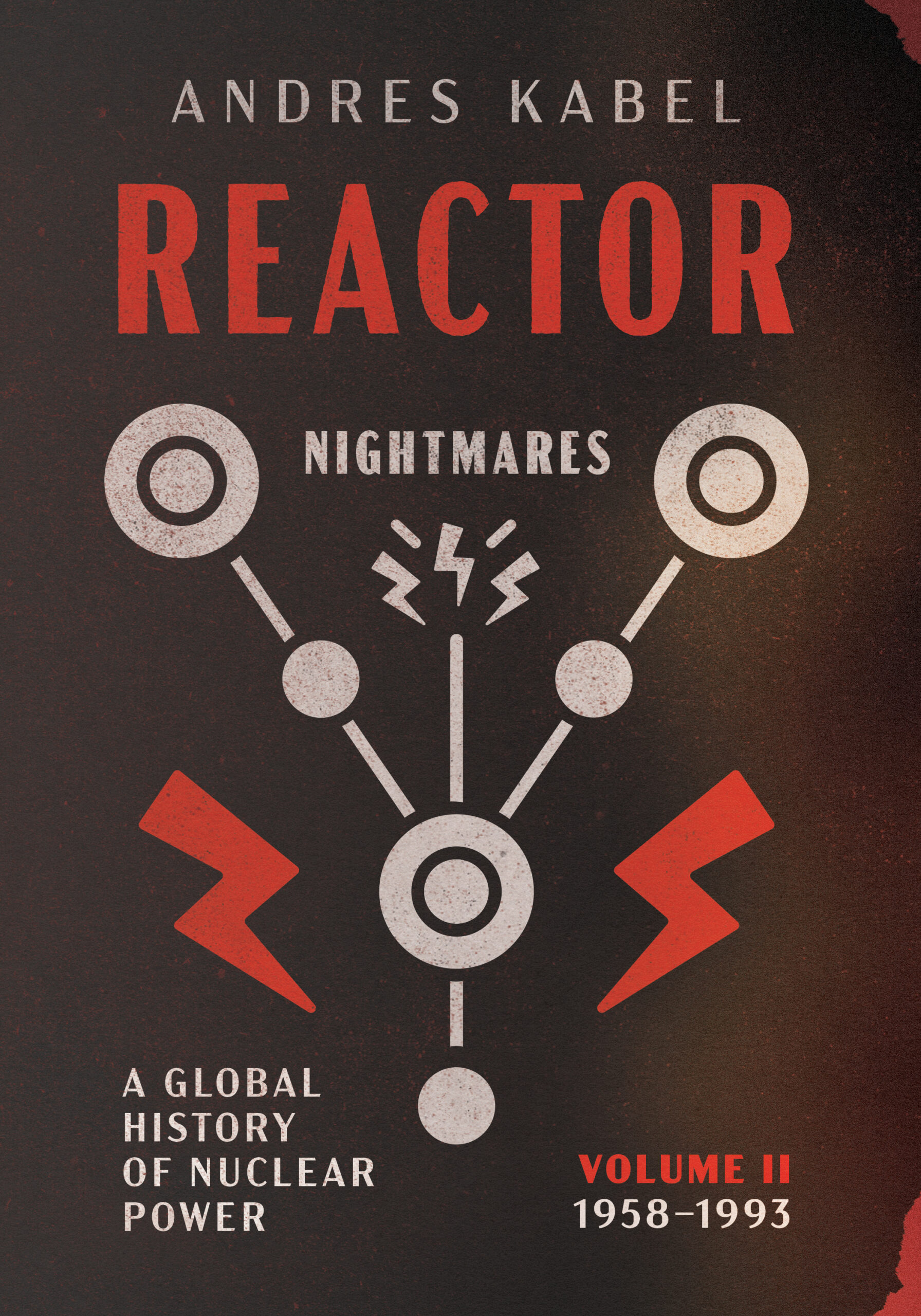
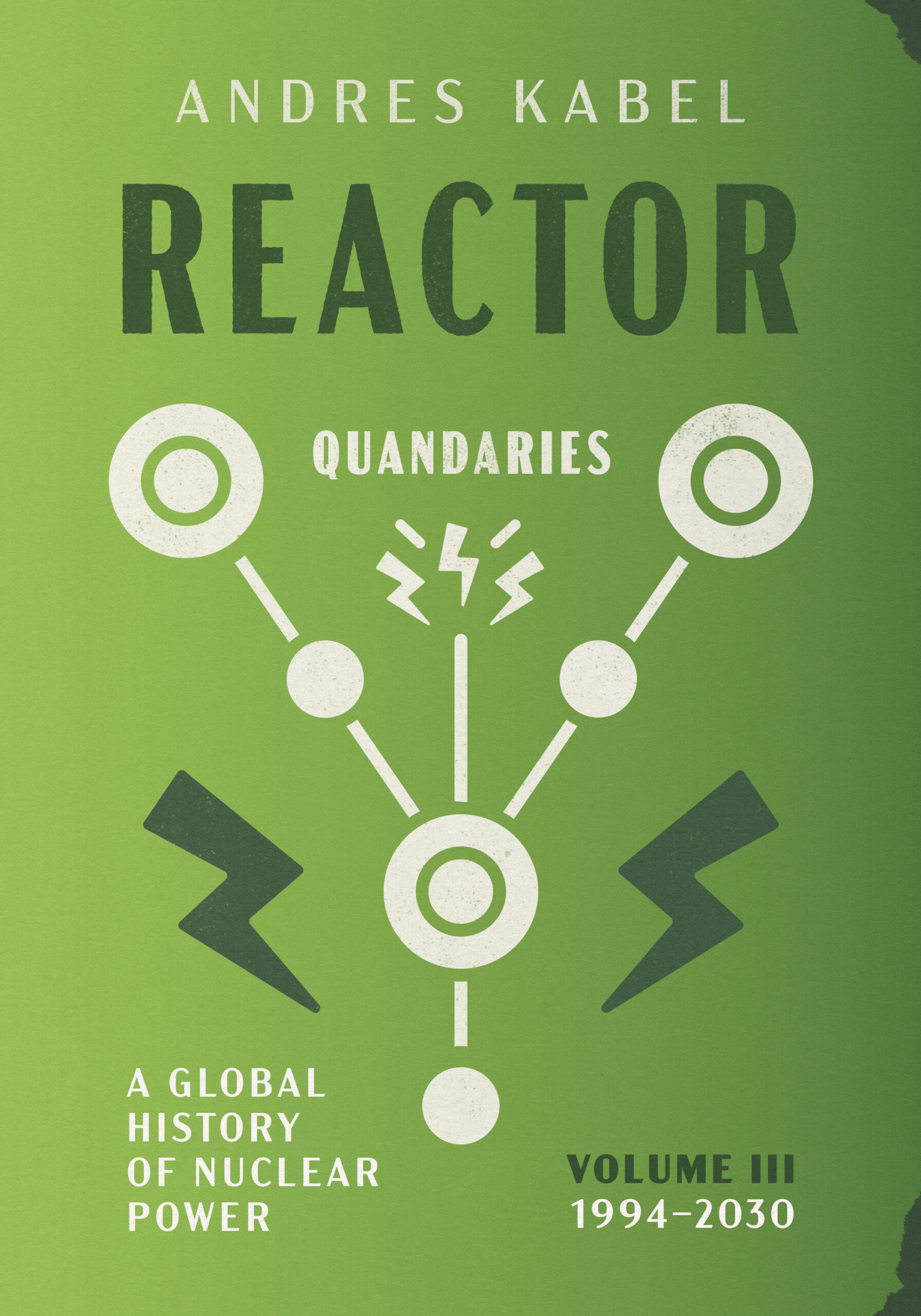
NEWS
The first review is in
A fulsome review from David Lochbaum, notably:
Reactor Visions differs from other books covering these years of nuclear power development by not focusing on any one nation’s journey but covering the developments worldwide. Kabel does a stellar job of describing when nations collaborated on nuclear power development, when they competed, and when they proceeded alone. Likewise, Kabel does an equally stellar job of explaining when factions within a single nation conspired to advance nuclear power development and when differences were imposed as roadblocks to development.
November 30 is the official publication date
If you already subscribe to my book newsletter, you’ll have details of the upcoming ebook and paperback options, including indicative pricing. If you’re not yet a subscriber, check this out:
The quickest and cheapest, by far, purchase option is an Amazon Kindle ebook, and if you’re in America, this is the link (elsewhere, do an easy Amazon search).
Here it is!
One stop closer to bringing out the only comprehensive global history of nuclear power (albeit only Volume I, covering fifteen years, as of now)… The unboxing… Coming in November!

A free map!
Take a look in Resources. I’ve added a cool map of power reactors at the end of VISIONS, that is, the end of 1957. More information with the map…
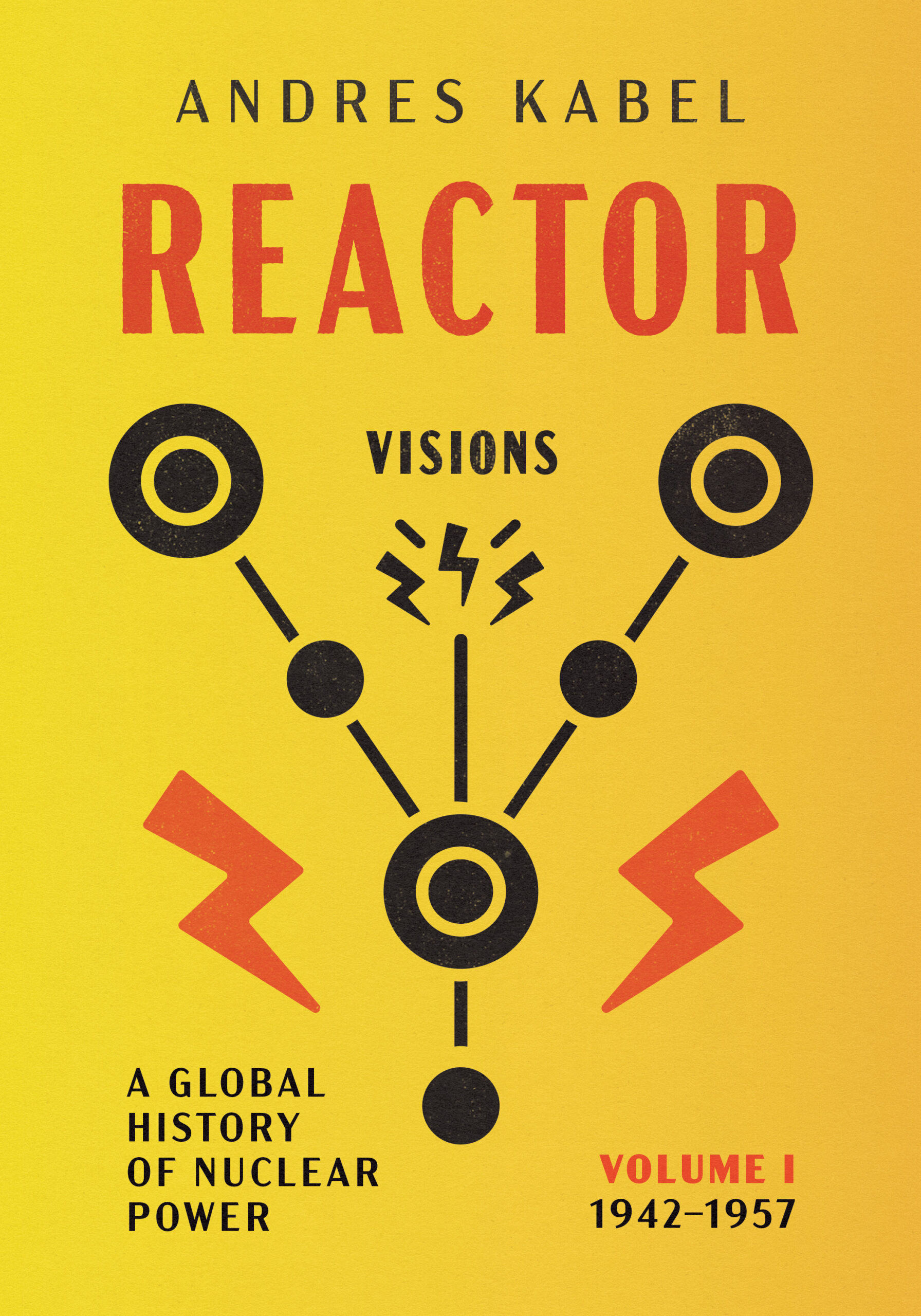
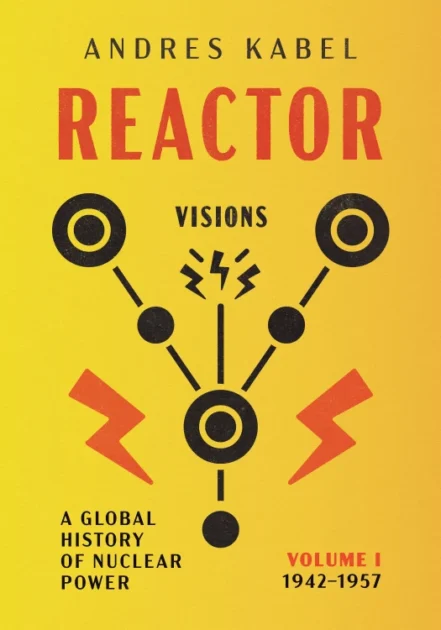
Cover reveal
Take a look at the cover of the upcoming publication. I’m so proud of the work of Nathaniel Roy!
This website is now live
It is impossible to overstate my pleasure in relaunching this website as my hub for the next half-decade and longer, a hub full of:
- News about VISIONS: VOLUME I, 1942–1957, the first instalment in my trilogy-in-making, REACTOR: A GLOBAL HISTORY OF NUCLEAR POWER
- Progress on the next two volumes
- Out-takes, snippets, and musings arising from research
Reviews
David Lochbaum, nuclear engineer, technical adviser; former director of the Union of Concerned Scientists’ Nuclear Safety Project
Andres Kabel’s Visions: Volume 1, 1942–1957, the first volume in Reactor: A Global History of Nuclear Power, is a thoroughly researched and extremely well written account of the birth and development of nuclear power in the United States, United Kingdom, Canada, France, the Soviet Union, and other countries. The demonstration of a nuclear chain reaction on Chicago Pile 1 by Enrico Fermi, Walter Zinn and others marks the 1942 beginning of Kabel’s discourse. The startup of the Shippingport reactor and the accident at Windscale mark the 1957 ending of the discourse. Between these two momentous milestones, Kabel’s writing is “Goldilocks”—neither too little to support the points being made or too much as to belabor those points.
Reactor Visions differs from other books covering these years of nuclear power development by not focusing on any one nation’s journey but covering the developments worldwide. Kabel does a stellar job of describing when nations collaborated on nuclear power development, when they competed, and when they proceeded alone. Likewise, Kabel does an equally stellar job of explaining when factions within a single nation conspired to advance nuclear power development and when differences were imposed as roadblocks to development.
Reactor Visions does a fantastic job of explaining why nations selected the reactor technology they pursued (i.e., pressurized water reactor, heavy water reactor, gas-cooled reactor, etc.). Reactor Visions does not employ hindsight to describe some selections as wrong and others as right. Instead, it describes the information available to decision-makers and the context for their decisions.
Chapter 6 of Reactor Visions covers the August 1955 International Conference on the Peaceful Uses of Atomic Energy in Geneva, Switzerland. Kabel clearly and concisely explains the role this two-week conference played not only in acknowledging achievements to date but also providing the foundation for future development. Kabel discusses the connections made at this international conference that fostered many future collaborations.
Prior to reading Reactor Visions, I had some awareness of the nuclear power development history in the United States, United Kingdon, Canada and France. While my awareness told me what had happened, Reactor Visions expanded my awareness considerably by explaining why and how these happenings occurred. Reactor Visions is many pages long, but my investment of time in reading those many pages was well rewarded in the broader understanding it provided.
DOWNLOADABLE PDFs
Click the buttons below to access the PDFs.