The safety of nuclear power plants remains a fraught societal issue. The history of this aspect of nuclear reactors is, I’ve found, difficult to conceptualize. For example, here are two academics (political scientists, maybe) writing in 1986:
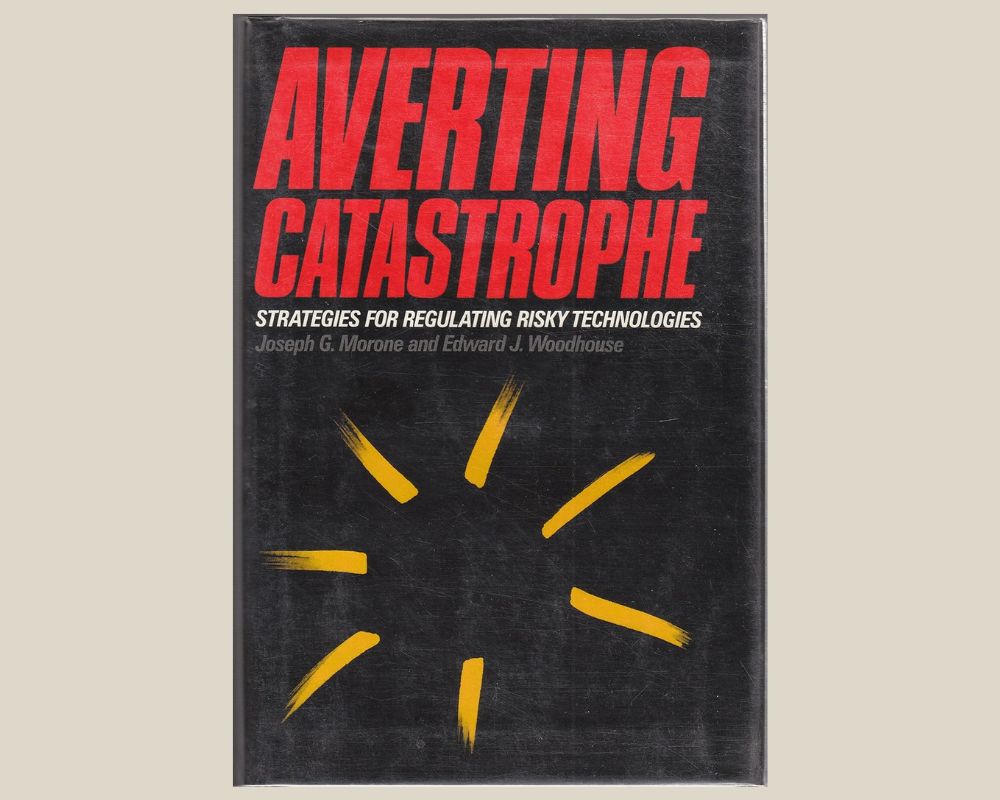
In 1947 the Atomic Energy Commission (AEC) established a Reactor Safeguard Committee (RSC) comprised of leading atomic scientists from outside AEC; the first chairman was Edward Teller. The committee’s function, as its name implies, was to determine whether the reactors then being planned by the AEC could be built without endangering public safety. As its basic approach to reactor safety, the committee decided to continue the practice established by the Manhattan Project during World War II (that is, the effort to develop the atomic bomb) of keeping reactors isolated from the population as much as possible. Thus, if a serious release of radioactivity did occur, the effects on public safety would be minimized. Each reactor was to be surrounded by two concentric areas. The inner area would be unpopulated and under the complete control of the AEC, and the outer area would be populated by no more than ten thousand people. The size of the two areas depended partly on the powerfulness of the reactor: the greater the power, the larger the areas. The size of the outer area also depended on the type of reactor and on the meteorology, hydrology, and seismology of the geographical region.
Morone, Joseph G., & Edward J. Woodhouse. 1986. Averting Catastrophe: Strategies for Regulating Risky Technologies. University of California Press, Berkeley, p. 39.
Nearly forty years later, with the Fukushima calamity added to our database of nuclear mishaps, the use of remoteness is barely mentioned in discussions about nuclear energy. Does that mean we “understand” reactor safety more than back in the 1940s, so that siting is no longer an issue? Or is distance from populations a factor that is retained but normalized? Does everyone involved internalize any distance rules in the same way that coal plants must be reasonably isolated from cities? I’m not sure I’ll make my mind up on this issue until I’ve moved forward through the history and seen how the discourse changed.