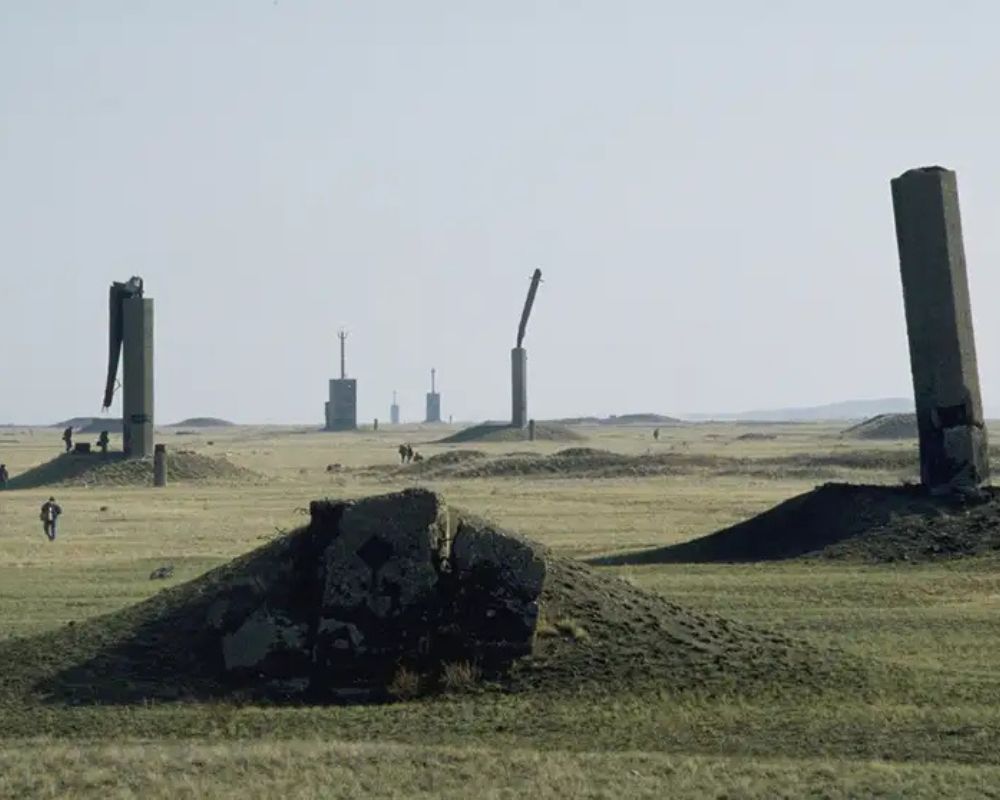
Say what you like about Western nuclear safety and dose management in the postwar era, there was nothing like the blatant disregard for public protection that the Soviet Union exhibited. Because the communist state was highly effective at secrecy, few realized the discrepancy between West and East in those early years (in fact it took the collapse of the Soviet Union to bring the sordid facts to light).
Here is British science writer Fred Pearce with a ferocious blast in 2018:
After opening in 1949, Semipalatinsk had become the busiest bomb testing ground in the world. In all, there were 619 tests, 122 of them atmospheric. It was also the most secretive. Nobody downwind was told anything about what the bomb-testers were up to. …
Pearce, Fred. 2018. Fallout: A Journey Through the Nuclear Age, from the Atom Bomb to Radioactive Waste. Portobello Books, London, pp. 53, 55, 72.
The researchers reported finding widespread and persistent radioactive contamination across the towns and villages of eastern Kazakhstan. In mid-September 1956, radiation doses from breathing the air around Ust-Kamenogorsk reached 1.6 milliroentgen per hour, equivalent to roughly 140 millisieverts over a year. This was a hundred times the “permissible rate” at the time and appeared to be the result of “recent contamination,” the report said. …
Even by the standards of the day, the plutonium complex was built shambolically and with zero regard for the safety of its workers, their families, or indeed the landscape for hundreds of miles around. Accidents were frequent. Flasks containing lethal plutonium solutions regularly went missing. Conscripted soldiers were forced to clean up radioactive spills with rags and buckets. Workers were routinely exposed to crazily high levels of radiation. There were at least seven criticality accidents, in which spilled plutonium briefly underwent a chain reaction, releasing a lethal rush of radioactivity.