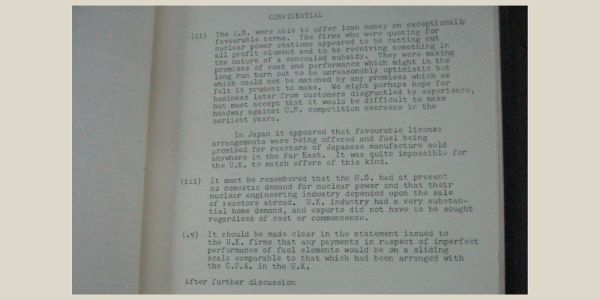
By 1957, there were four brand new reactor manufacturing consortia in the United Kingdom (with one more to come by the next year). They were all using the unique British gas cooled reactor design, albeit with competitive variations between firms. Their home market was guaranteed by the near monopoly of the state electricity utility. But overseas. they competed. And their only competitor then was the United States. It wasn’t easy, this competition, as this meeting minute from the Atomic Energy Authority meeting in London on February 21 reveals:
They [U.A.A.] were making [in Italy] promises of cost and performance which might in the long run turn out to be unreasonably optimistic but which could not be matched by any promises which we felt it prudent to make. We might perhaps hope for business later from customers disgruntled by experience, but must accept that it would be difficult to make headway against U.S. competition overseas in the earliest years. In Japan it appeared that favourable licence arrangements were being offered and fuel being promised for reactors of Japanese manufacture sold anywhere in the Far East. It was quite impossible for the U.K. to match offers of this kind. It must be remembered that the U.S. had at present no domestic demand for nuclear power and that their nuclear engineering industry depended upon the sale of reactors abroad. U.K. industry has a very substantial home demand, and exports did not have to be sought regardless of cost or commonsense
United Kingdom Atomic Energy Authority. 1957j. Meeting 4, Feb. 21, 1957 minutes. AB 41/617. National Archives, Kew, United Kingdom.