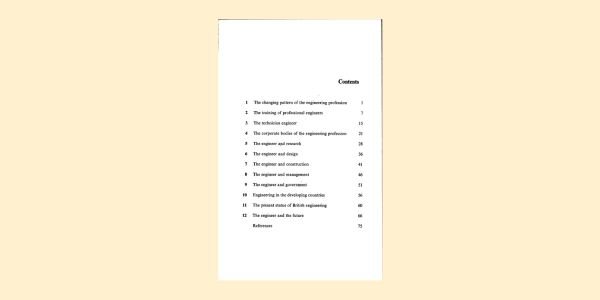
One of the rousing aspects of researching the nuclear power pioneers is discovering how many of them were fascinating, fascinating as professionals and fascinating as people. Christopher Hinton, one of the duo that launched England’s brief supremacy of the global nuclear power sector, intrigues especially. He was a workplace tyrant who was nonetheless passionate about his staff, passionate about education, passionate about his chosen profession as engineer. I possess endless material about and by him that won’t make its way into the upcoming book and I dearly wish an aspiring biographer would tackle his life. For now, besides copious archival material in the National Archives at Kew, we have official public servant biographer Margaret Gowing’s warm portrait (in Independence and Deterrence: Britain and Atomic Energy, 1945-52) and a quirky sort-of-autobiographical volume (slim at 82 pages) Hinton wrote in 1970 (aged 69), Engineers and Engineering.
The latter book’s title expresses Hinton’s aim, namely to explain his calling and its nature and its status and future, but he sprinkles wonderful anecdotes throughout. Here he talks of his early days:
Most [engineering aspirants] went, as I did, from school to craft apprenticeship. When, after five years on the shop floor, I was moved into the drawing-office at the Great Western Railway Company’s works at Swindon, the engine erector with whom I was working said, “I’m sorry you’re going, you’re the best apprentice craftsman I’ve ever had working with me”, and I think I remember that with as much pride as I remember my first-class Honours in the Mechanical Sciences Tripos at Cambridge.
Hinton, Christopher. 1970. Engineers and Engineering. Oxford University Press, London, pp. 2-3.
It was a hard way of learning a profession. When I started work the engineering industry was still conditioned to a 54-hour week; the hours were from 6:00 a.m. to 5:30 p.m. from Monday to Friday and till noon on Saturday. … I was going to evening classes on four evenings a week. …
That workshop experience may have taken too long but I do not believe it would have been possible to get a sounder practical training; there is no better way of learning what makes for perfection in detailed design than to repair plant or machinery that has been in service and I think that it takes years for this shop-floor experience to soak in.
“What makes for perfection…” Surely no other engineering field requires perfection more than that of nuclear engineering!